Football Training Program for Kids: The Complete Guide to Soccer Training for Kids
- 1 day ago
- 8 min read
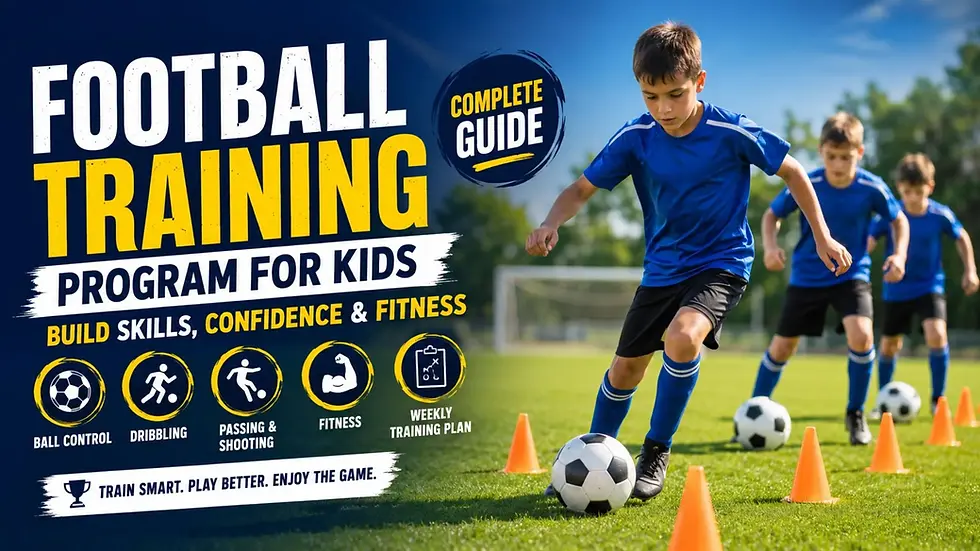
Give your child the best start with a structured football training program for kids designed to build confidence, improve technique, and develop game-ready skills. This complete guide covers essential soccer training for kids, including ball control, dribbling, passing, shooting, fitness, and age-specific practice plans. You'll also discover effective home training ideas and expert tips to help young players improve consistently both on and off the field.
Why Football Training Is Important for Kids
A structured football training for kids program helps young players build strong technical skills, improve fitness, and develop confidence on the field. Regular soccer training for kids teaches children how to control the ball, make smarter decisions, and enjoy the game while learning essential fundamentals. Whether your child is a beginner or already plays for a team, consistent training creates habits that lead to long-term improvement. With the right balance of practice and fun, young players can develop the skills needed to perform confidently in every match.
🔗 Read also: If your child is just starting, improving ball control is the first step. Check out our guide on Soccer Ball Control Drills for simple exercises that build confidence and technical ability.
Physical Benefits of Football Training
Regular football training for kids improves speed, agility, balance, coordination, and overall fitness. It also strengthens muscles, enhances endurance, and helps children stay active while reducing the risk of injuries. These physical benefits allow young players to move more confidently and perform better throughout a match.
Mental and Social Benefits
Football teaches much more than technical skills. Through regular soccer training for kids, children learn teamwork, communication, discipline, and resilience. Training sessions also improve concentration, decision-making, and self-confidence, helping young players grow both on and off the pitch.
Why Early Soccer Training Matters
Starting soccer training for kids at a young age allows players to develop proper techniques before bad habits form. Learning skills such as passing, dribbling, and first touch early creates a strong foundation for future success. As players progress, these fundamentals become easier to apply during competitive matches.
What Makes a Good Football Training Program for Kids?
A successful football training for kids program is about more than practising a few drills. It should help children develop technical skills, improve fitness, and enjoy the game while progressing at their own pace. The best soccer training for kids combines structured sessions, regular practice, and age-appropriate activities to build confident, well-rounded players.
Age-Appropriate Training Sessions
Every child develops differently, so training should match their age and ability. Younger players should focus on fun, simple exercises that improve coordination and ball control, while older children can gradually introduce more advanced technical and tactical drills.
Balancing Fun and Skill Development
Children learn best when they enjoy training. Mixing games, challenges, and skill-based exercises keeps sessions engaging while improving dribbling, passing, shooting, and first touch. A positive environment encourages consistent practice and long-term development.
Setting Realistic Goals for Young Players
Small, achievable goals help children stay motivated and measure their progress. Whether it's improving first touch, completing more accurate passes, or mastering a new skill, celebrating gradual improvement builds confidence and encourages regular practice.
🔗 Related Guide: Ball control is the foundation of every training program. Read our Ball Control Drills for Kids guide to discover fun exercises that improve first touch, coordination, and confidence.
Essential Soccer Training Skills Every Child Should Learn
Every young player needs a strong foundation before moving on to advanced techniques. A well-planned football training for kids programme should focus on the core skills used in every match. These fundamentals help children play with greater confidence, improve decision-making, and enjoy long-term success on the pitch.
Ball Control
Ball control is the foundation of every great player. Learning to keep the ball close allows children to dribble with confidence, maintain possession, and react quickly under pressure. Regular soccer training for kids should always include ball control exercises to develop consistency and technique.
First Touch
A good first touch gives players more time and space to make their next move. Whether receiving a pass or controlling a bouncing ball, developing this skill helps children play with greater composure and accuracy during matches.
Dribbling Skills
Dribbling helps players move past defenders while keeping possession. Practising close control, changes of direction, and different speeds allows children to become more confident and creative when attacking.
Passing and Receiving
Accurate passing and controlled receiving are key parts of successful team play. Young players should practise short passes, longer passes, and receiving the ball with different parts of the foot to improve their overall game.
Shooting Techniques
Learning proper shooting technique helps children improve both power and accuracy. Regular practice with different types of finishes gives young players the confidence to score in a variety of match situations.
Ball Control
Ball control is one of the most important skills every young player should learn. It helps children keep the ball close, stay in possession under pressure, and move confidently around the pitch. Regular football training for kids should include simple ball control exercises that improve coordination, balance, and confidence. As players develop better control, they become more comfortable making quick decisions during matches.
First Touch
A quality first touch gives players more time to think and react during a game. Instead of losing possession, children learn to control the ball smoothly and prepare for their next pass, dribble, or shot. Adding first-touch exercises to every soccer training for kids session helps improve composure, accuracy, and overall game performance.
Dribbling Skills
Dribbling allows young players to move the ball confidently while avoiding defenders. Practising close control, quick turns, and changes of direction helps children become more creative and effective in attacking situations. Regular dribbling practice also improves balance, coordination, and confidence on the ball.
Passing and Receiving
Passing and receiving are essential skills that help players work effectively as a team. Children should practise accurate passes with both feet and learn how to receive the ball with control before making their next move. Strong passing skills improve teamwork, ball retention, and decision-making during matches.
Shooting Techniques
Learning the correct shooting technique helps young players become more accurate and confident in front of goal. Children should practise shooting with different parts of the foot, aiming for placement before power. Including shooting exercises in every football training for kids programme helps players develop better finishing skills and confidence during competitive games.
Football Training for Kids by Age Group
Children develop at different stages, so their training should match their age and ability. A well-structured football training for kids programme focuses on building confidence first, then gradually introduces more advanced techniques as players grow. Age-appropriate soccer training for kids helps children enjoy the game while developing the right skills at the right time.
Football Training for Kids Aged 5–7
At this age, training should be simple, fun, and engaging. Activities like ball control, dribbling around cones, and basic passing help children improve coordination and confidence. The goal is to encourage plenty of ball touches while making every session enjoyable rather than competitive.
Football Training for Kids Aged 8–10
Children in this age group are ready to learn more advanced techniques. Training should include first touch, passing, dribbling, shooting, and small-sided games that improve decision-making. Regular practice helps players build consistency and prepares them for more competitive football.
Football Training for Kids Aged 11–14
Older players benefit from higher-intensity sessions that combine technical skills with fitness and tactical awareness. Training should focus on improving speed, agility, ball control, passing under pressure, and finishing. Consistent practice at this stage helps players perform with greater confidence during matches.
10 Football Training Drills Every Kid Should Practice
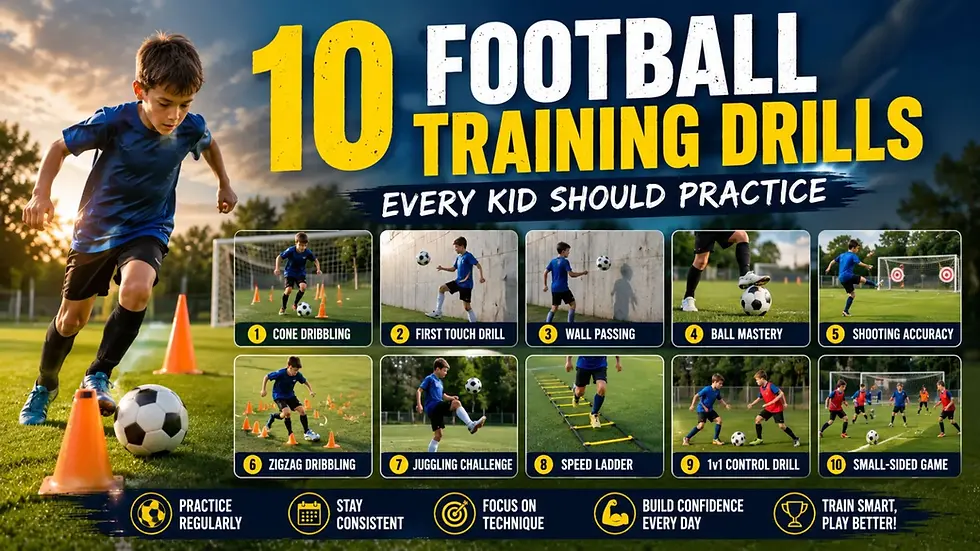
The best way to improve is through consistent practice. These football training for kids drills help develop ball control, passing, shooting, agility, and confidence. They are easy to follow at home or on the training ground and are suitable for players of all skill levels.
Cone Dribbling Drill
Set up five to eight cones in a straight line and dribble through them using short, controlled touches. Focus on keeping the ball close while changing direction smoothly. This drill improves close control, balance, and coordination.
First Touch Drill
Ask a partner to pass the ball or use a wall. Control the ball with your first touch before passing it back. This exercise develops a softer first touch and helps players react quickly during matches.
Wall Passing Drill
Pass the ball against a wall using both feet and control each return pass before playing it again. This simple drill improves passing accuracy, receiving skills, and confidence on the ball.
Ball Mastery Drill
Perform toe taps, sole rolls, and inside-outside touches for 30–60 seconds each. These exercises increase the number of ball touches and help young players feel more comfortable controlling the ball.
Shooting Accuracy Drill
Place targets in the corners of the goal and aim for them using controlled shots. Focus on accuracy first, then gradually increase power as technique improves.
Zigzag Dribbling Drill
Arrange cones in a zigzag pattern and dribble through them using both feet. This drill improves agility, quick changes of direction, and close ball control.
Juggling Challenge
Start by keeping the ball in the air for a few touches and gradually increase the number. Juggling develops coordination, balance, and a better first touch.
Speed Ladder Drill
Use an agility ladder or mark lines on the ground to practise quick foot movements. This exercise improves speed, coordination, and overall footwork.
1v1 Control Drill
Practise attacking and defending against a partner in a small area. This drill helps players improve dribbling, decision-making, and confidence under pressure.
Small-Sided Game
Finish training with a 3v3 or 4v4 match. Small-sided games encourage more ball touches, quicker decisions, and better teamwork while allowing players to apply everything they've practised.
Weekly Football Training Programme for Kids
A consistent weekly routine helps children improve without overtraining. Instead of practising for several hours in one day, shorter sessions spread across the week produce better long-term results.
Monday – Ball Mastery & First Touch
Start the week with toe taps, sole rolls, wall passes, and first-touch exercises. These activities improve confidence, coordination, and ball control.
Tuesday – Dribbling & Ball Control
Focus on cone dribbling, changes of direction, and close-control exercises. Keeping the ball close while moving quickly builds confidence during matches.
Wednesday – Passing & Receiving
Spend 30 minutes improving passing accuracy and receiving with both feet. Wall passing is a simple but highly effective exercise that can be done almost anywhere.
Thursday – Shooting Practice
Work on finishing from different angles using both feet. Prioritise technique and placement before increasing shooting power.
Friday – Speed, Agility & Fitness
Include sprint drills, agility ladder exercises, shuttle runs, and coordination drills. Better movement allows young players to react faster during matches while reducing fatigue.
Saturday or Sunday – Match Day & Recovery
Finish the week with a small-sided game, friendly match, or team training session. Afterwards, complete a light cool-down and stretching routine to support recovery and prepare for the following week's training.
Football Training at Home for Kids
Young players can improve their skills at home with just a football and a small practice area. Simple drills like ball mastery, passing against a wall, and dribbling help build confidence and consistency. Training for 20–30 minutes, three to four times a week, supports steady improvement.
Football Fitness and Injury Prevention
A good football training for kids programme should include speed, agility, strength, and flexibility. Dynamic warm-ups, bodyweight exercises, and proper recovery help young players perform better while reducing the risk of injury.
Common Football Training Mistakes Kids Make
Avoid common mistakes such as training without a plan, relying only on the stronger foot, skipping ball control practice, and not practising at home. Consistent, structured training leads to faster improvement.
How a Soccer Training App Can Help Kids Improve Faster
A Soccer Training App provides structured sessions that children can follow anytime. It helps improve ball control, dribbling, passing, shooting, and fitness while keeping players motivated with a clear training plan.
Frequently Asked Questions
What is the best age to start football training?
Children can start learning basic football skills from 5–6 years old.
How often should kids train?
Three to five sessions per week, lasting 20–45 minutes, are ideal.
Can kids improve at home?
Yes. Regular home practice improves confidence, ball control, and technique.
What is the best Soccer Training App?
Choose an app that offers structured drills, progress tracking, and age-appropriate coaching.
Final Thoughts
A structured football training for kids programme helps young players build technical skills, improve fitness, and gain confidence. By combining regular practice, home training, and a quality Soccer Training App, children can continue developing their game while enjoying every step of their football journey.